Most people assume a junk removal company will not take something specific — a broken appliance, a stained mattress, a pile of yard waste — and are surprised to hear we take all of it. The actual exceptions are a short, specific list driven by Georgia disposal law rather than by what looks unpleasant to load onto a truck.
What we cannot take
- Hazardous and chemical waste. Paint, solvents, pesticides, pool chemicals, motor oil and similar chemical waste cannot legally go into a general disposal load. Cobb and Douglas counties both run household hazardous waste programs specifically for this category.
- Asbestos-containing material. Old floor tile, pipe insulation and certain ceiling materials in homes built before the 1980s sometimes contain asbestos, which requires a licensed abatement contractor rather than a standard hauling crew.
- Medical and biohazard waste. Sharps, medications and anything contaminated with bodily fluids need a medical waste service, not general junk removal.
- Items with active mold, pest infestation or biohazard contamination. This is the one that surprises people most. We will tell you plainly if we see this on arrival, since loading a contaminated item creates a real problem for everyone else on the truck.
- Ammunition and explosives. These need law enforcement or a specialty disposal service, not a hauling company.
- Certain electronics with specific handling rules. Old CRT televisions and monitors contain leaded glass and require e-waste recycling rather than standard disposal in Georgia.
What people assume we cannot take, but we can
This list is usually longer than the exceptions above, and it is worth knowing since it changes what people bother calling about.
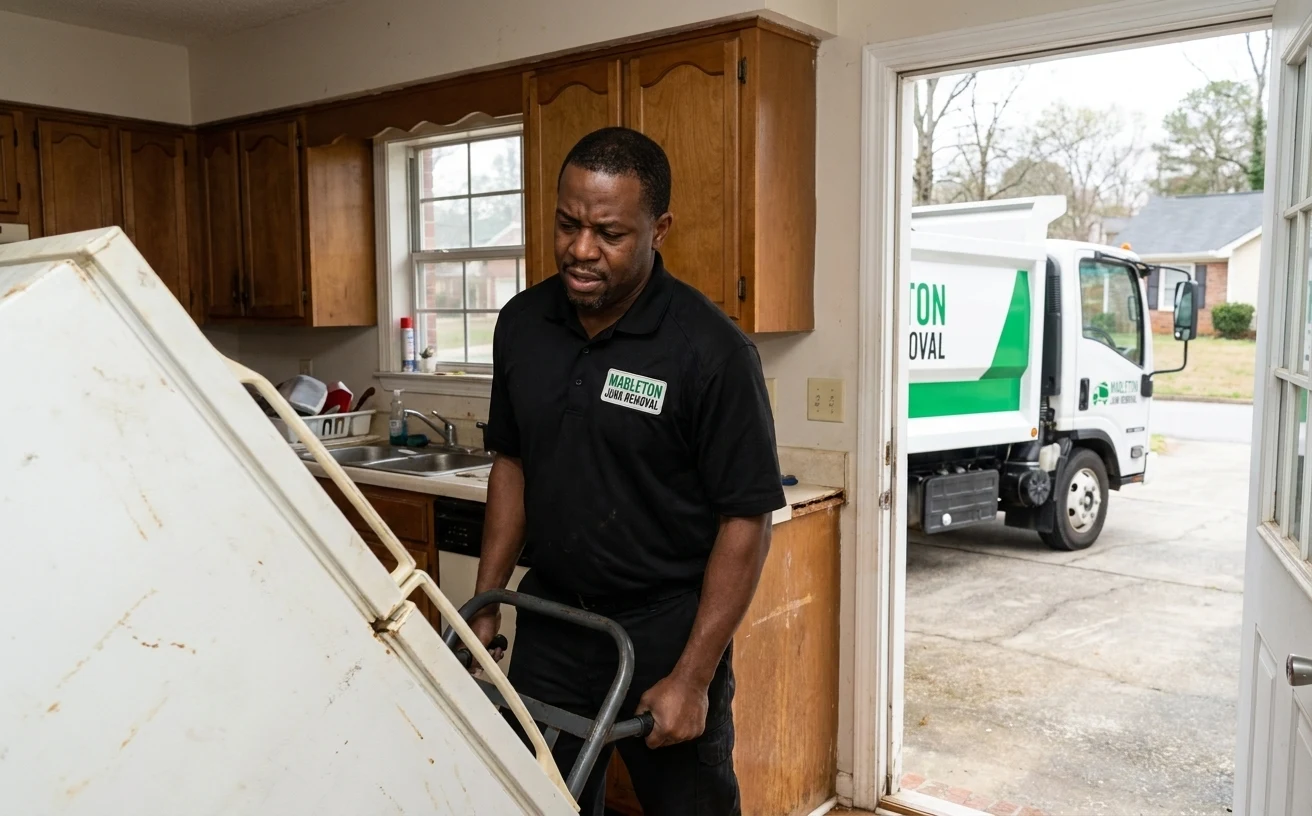
- Broken or non-working appliances. Refrigerators, washers and dryers in any condition, including units that no longer run — see our appliance removal page for how refrigerant is handled.
- Stained, torn or heavily used furniture. Condition does not disqualify a piece from removal, only from donation. Furniture that cannot be donated still gets hauled to disposal.
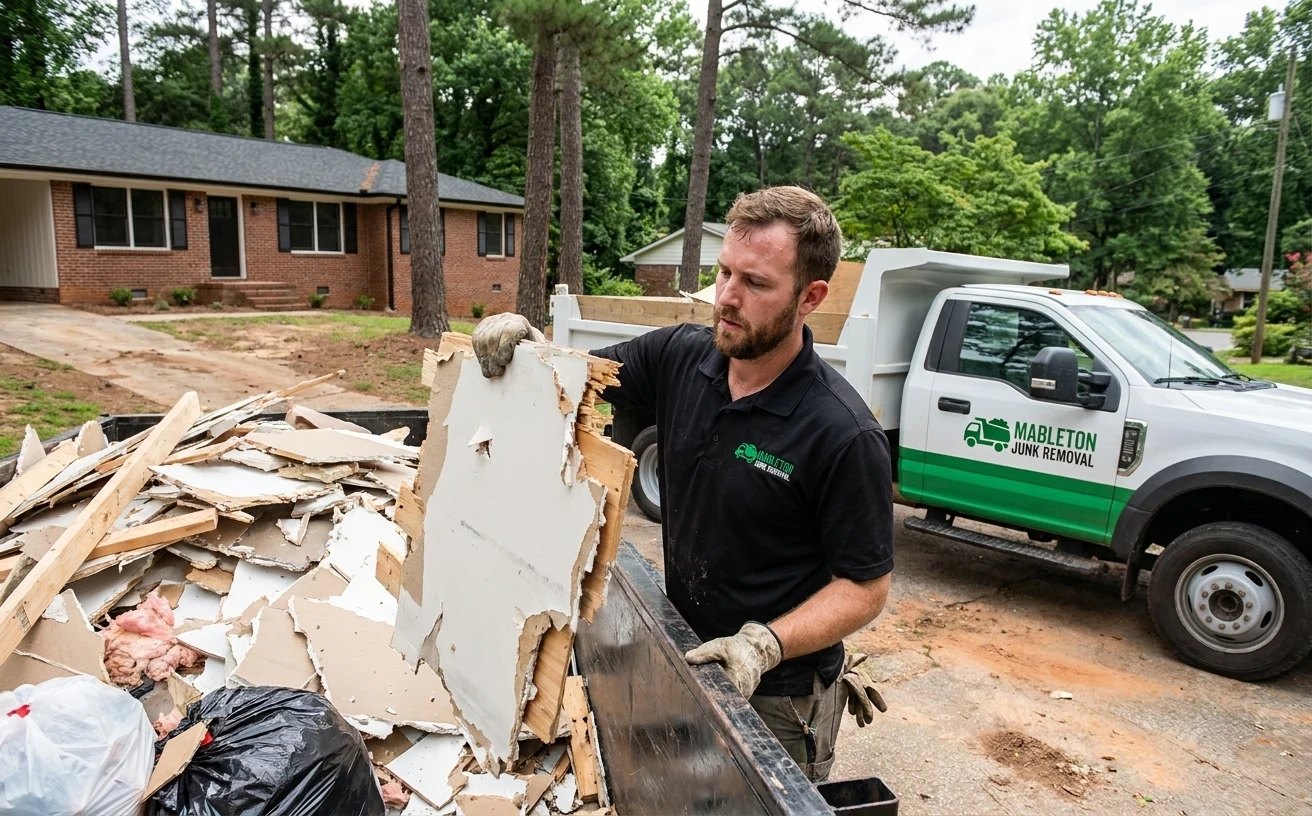
- Construction and renovation debris. Drywall, flooring, cabinetry and similar remodel debris are a normal part of construction debris removal, with the asbestos caveat above for older homes.
- Yard and storm debris. Fallen limbs, brush piles and landscaping waste are routine work, covered under yard and storm debris removal.
- Tires. We haul them, though a modest per-tire disposal fee applies since Georgia requires tires to go through a specific recycling stream.
- Large, heavy or awkward single items. Pianos, gun safes and hot tubs are handled case by case — call ahead so we bring the right crew size and equipment.
Where the exceptions actually go
Cobb and Douglas county residents can drop off household hazardous waste, including paint, chemicals and certain electronics, at each county's designated collection events and facilities. For asbestos testing or abatement, a licensed environmental contractor needs to assess the material before any removal happens, in the home or otherwise. If you are not sure which category something falls into, call us and describe it — we can usually tell you over the phone whether it is something we haul or something that needs a specialty service first.
A few gray areas explained
Propane tanks and fire extinguishers
Small propane cylinders and fire extinguishers fall into a gray zone: pressurized containers cannot go into a standard landfill load, but many retailers and county collection sites accept them for proper disposal or exchange. Ask us before pickup day so we can tell you whether it makes sense for us to route it separately or for you to drop it at an exchange location that is often more convenient anyway.
Large mirrors and plate glass
We take these, but flag them ahead of time since they need to be padded and carried differently than a normal item to avoid breakage that could injure the crew or damage other items on the truck.
Old paint that has fully dried out
Georgia treats latex paint that has completely dried and hardened differently from liquid paint in some cases, but this is not a distinction worth guessing on. Treat all paint, dried or not, as household hazardous waste and let the county facility make that call rather than assuming.
Why the list is short
Georgia and federal law regulate hazardous, medical and certain electronic waste specifically because standard landfill disposal is not safe or legal for those categories. Everything else — furniture, appliances, general household clutter, construction debris, yard waste — goes through normal channels, which is why the exception list stays short rather than growing every time something looks difficult to move.
This matters most for full house and garage cleanouts in Powder Springs and the rest of South Cobb, where garages and basements often accumulate decades of mixed items. In practice, the vast majority of what comes out of a typical Mableton-area garage clears our list without any complication.
What to do before you call
You do not need to sort your entire garage against this list before booking. Describe the bulk of what needs to go, and separately mention anything you suspect might be a chemical, an old TV, or building material from a home built before 1980. That single flag is usually enough for us to tell you over the phone whether it changes the plan, without requiring you to research disposal law yourself.