
The honest answer is that most cleanouts take far less time than people expect, and the anxiety about scheduling a whole weekend around it is usually unnecessary. The exceptions are predictable enough to plan around.
Typical timelines
| Item | Detail |
|---|---|
| Single garage | 2 – 4 hours |
| Single-family house, lightly furnished | 4 – 6 hours, one day |
| Single-family house, fully furnished | One full day, sometimes two loads |
| Multi-room estate or hoarder situation | 1 – 3 days depending on volume |
| Apartment or condo unit | 2 – 5 hours |
What determines the timeline
Total volume
This is the biggest factor by far. A two-car garage with normal accumulation clears in a couple of hours with a two-person crew. A house that has not been cleared out in a decade, or an estate cleanout spanning multiple rooms, can require several trailer loads run back to back, which stretches a single visit into a full day or occasionally two.
Whether sorting is needed
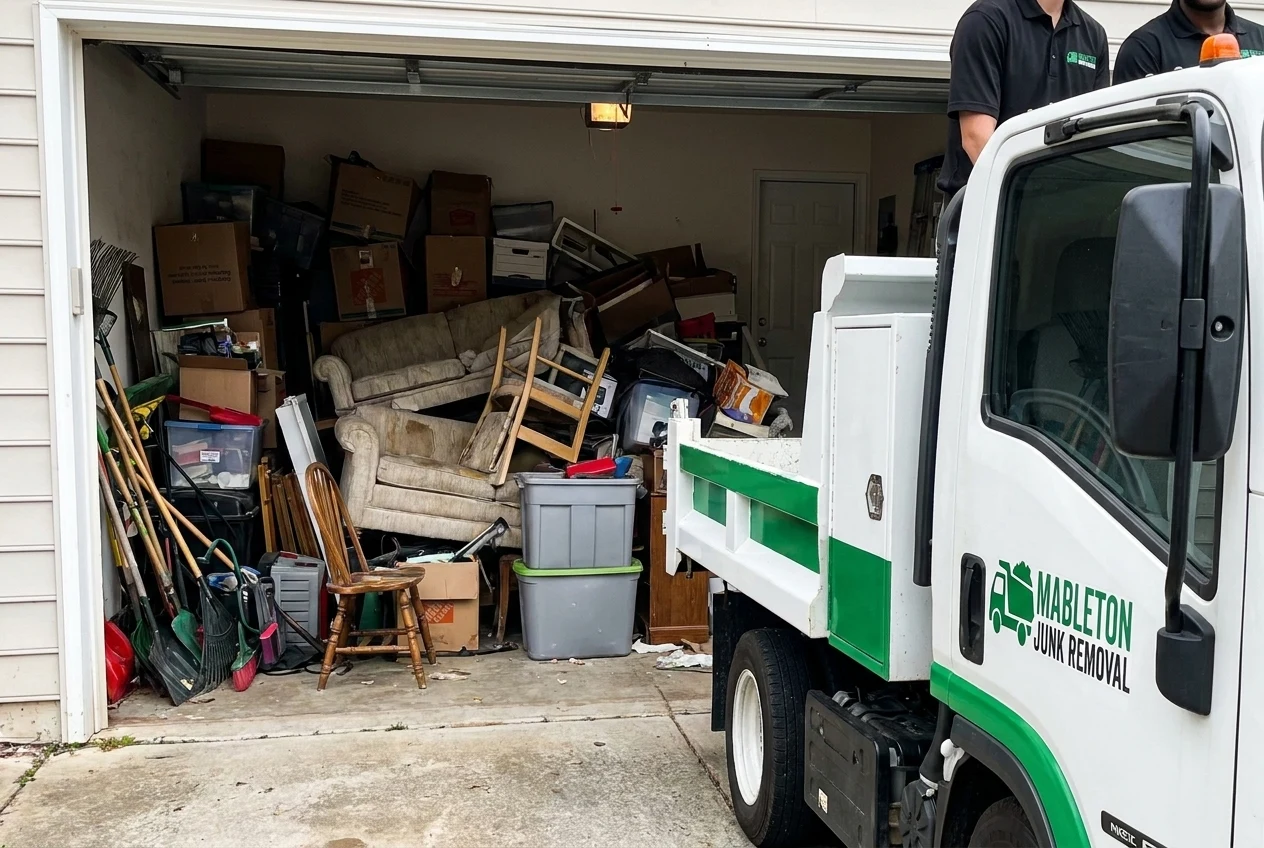
A cleanout where everything goes moves fast, since the crew simply carries items straight to the truck. A cleanout that requires sorting — separating keepsakes from disposal, checking drawers and closets for documents, setting aside donation-worthy furniture — takes meaningfully longer, since that sorting has to happen carefully rather than in bulk.
Access and layout
Stairs, narrow hallways, a detached garage with a long carry to the truck, or furniture that needs to be disassembled to clear a doorway all add time. A single-story home with a driveway right up to the front door is close to best-case; a third-floor walkup condo near Cumberland adds real time regardless of volume.
How many loads it takes
Our trailer holds a substantial amount, but a fully furnished house frequently needs two or three loads. Each load means a trip to the disposal or donation facility and back, which is the main reason a full house runs a full day rather than a few hours — not because the loading itself is slow, but because the truck has to make more than one trip.
How scheduling actually works
For anything beyond a single room, we like to get a rough sense of volume ahead of time — either a phone description or a few photos — so we bring the right crew size and truck capacity on the first visit rather than discovering mid-job that we need to come back. That planning step is what keeps a genuinely large cleanout to one or two days instead of stretching into a third.
If you are working against a deadline, like a closing date or a lease turnover, tell us up front. We prioritize scheduling around hard deadlines and can often compress a multi-day estimate into a single longer day with an extra crew member if the timeline requires it.
What to expect on cleanout day
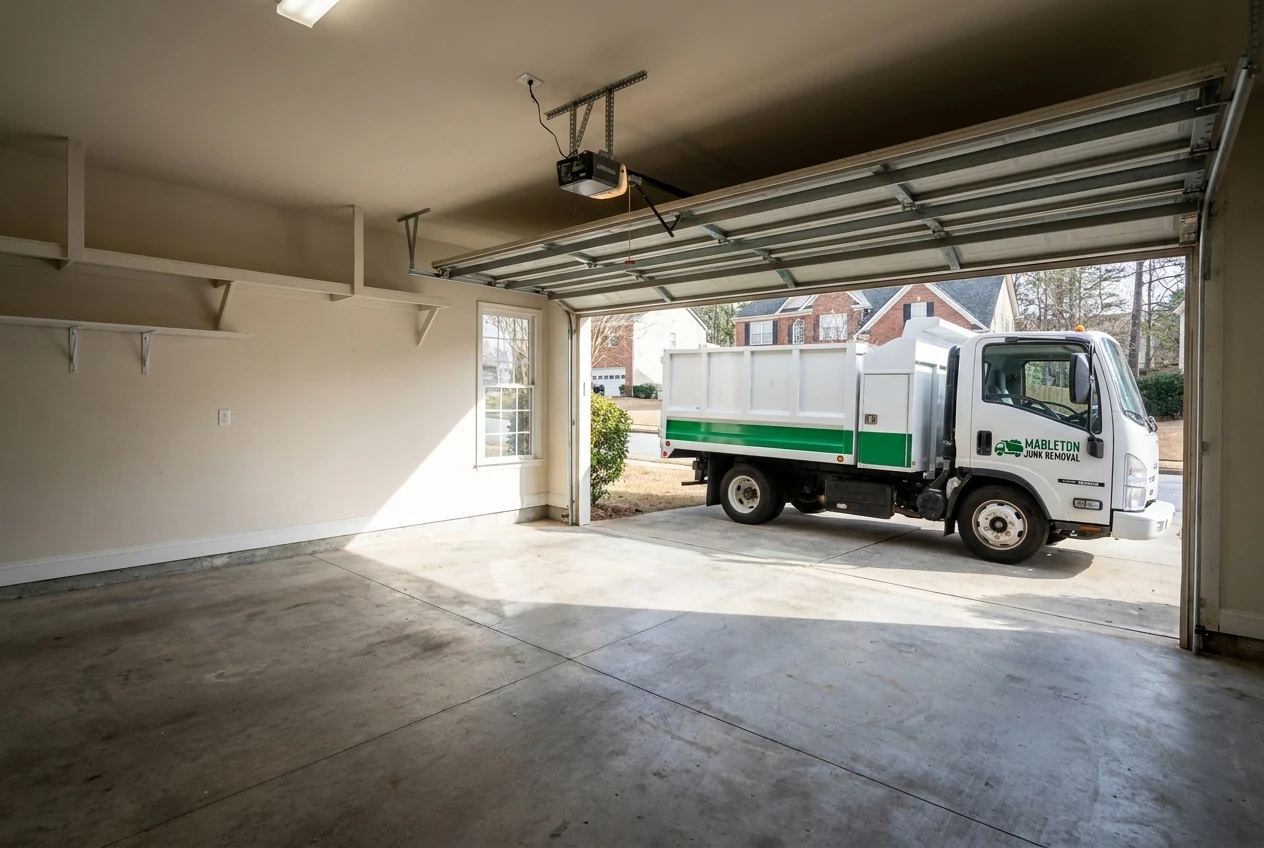
The crew walks the space with you first to confirm what stays and what goes, then works room by room or load by load depending on the property. Full house and garage cleanouts end with a swept, clear space — not just the big items removed with debris left behind. If you are in Smyrna or anywhere else in our service area, that standard holds regardless of job size.
What you can do to speed things up
A few minutes of prep before the crew arrives makes a real difference on timeline. Clear a straight path from the items to the driveway if you can, especially in garages where boxes tend to block their own exit route. If specific items are staying, set them aside or mark them clearly rather than leaving everything in one undifferentiated pile, since sorting on the fly is what slows a crew down more than volume alone. None of this is required — we can work around a fully packed space either way — but it can shave a genuine hour or more off a larger job.
What happens on a multi-day cleanout
For estate situations or houses that clearly need more than one day, we plan it as a defined schedule rather than an open-ended process. Typically that means the first day focuses on the largest volume rooms and any sorting-heavy areas, and a second day finishes detail work and the final sweep. You are told the plan up front rather than being left guessing whether day two is actually happening, and the property is left secure and swept at the end of each day, not mid-project.